The best dollar funds in Kenya let you save and grow money in US dollars, so your wealth is not fully exposed to a weakening shilling. As of the latest data (May 2026), the Nabo Africa USD Money Market Fund leads the safer end with a net return of about 5.89% a year in dollars. For growth, USD equity funds like the Arvocap Global Equity Special Fund aim higher by investing in global shares, but with far more risk. This guide ranks the options and explains the trade-offs in plain English.
A quick reality check first. Dollar funds pay less than shilling funds: a top USD money market fund nets around 5.9% while a top shilling one nets closer to 9.7%. You accept that lower yield in exchange for holding a harder currency. Whether that trade makes sense for you depends on what your money is for, and this article walks you through it.
Table of Contents
Key takeaways
- The best dollar funds in Kenya split into two groups: USD money market funds (safer, lower return) and USD equity or special funds (riskier, higher potential return).
- Among USD money market funds, Nabo leads at about 5.89% net, followed by Old Mutual (4.86%) and Etica (4.83%). The category averages roughly 5.12% gross and 4.35% net.
- Dollar funds pay less than shilling funds. You give up yield to hold a currency that does not lose value against the dollar.
- The real benefit shows up if the shilling weakens: your dollars are then worth more in shilling terms. If the shilling holds firm, that benefit disappears.
- As of 10 July 2026, the shilling traded near KSh 129.2 to the dollar and has been unusually stable, which has muted the case for dollar funds this year.
Best dollar funds in Kenya 2026: USD money market funds
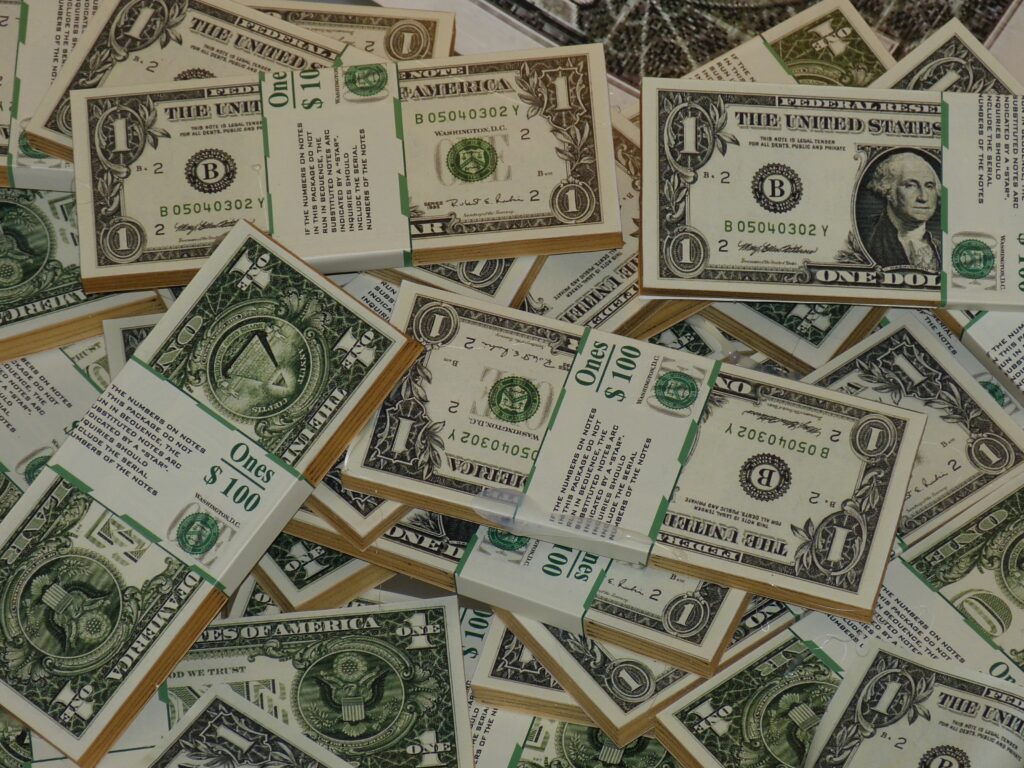
For most people, a USD money market fund is the natural first dollar fund. It works exactly like a shilling money market fund, holding short-term dollar instruments, but it pays and holds your money in US dollars. Your capital stays stable and you can usually withdraw within a few days. The table below ranks the funds tracked in the latest market wrap-up, by net return, as of May 2026.
| Rank | USD money market fund | Gross (% p.a.) | Net (% p.a.) |
|---|---|---|---|
| 1 | Nabo Africa MMF USD | 6.93 | 5.89 |
| 2 | Old Mutual MMF USD | 5.72 | 4.86 |
| 3 | Etica MMF USD | 5.68 | 4.83 |
| 4 | Dry Associates USD | 5.60 | 4.76 |
| 5 | Kuza MMF USD | 5.03 | 4.27 |
| 6 | Sanlam MMF USD | 5.02 | 4.26 |
| 7 | Jubilee MMF USD | 4.90 | 4.16 |
| 8 | Absa Dollar MMF | 4.75 | 4.04 |
| 9 | CIC MMF USD | 4.58 | 3.89 |
| 10 | KCB MMF USD | 4.41 | 3.75 |
| 11 | Britam MMF USD | 4.28 | 3.64 |
| Category average | 5.12 | 4.35 |
Nabo stands clear at the top, and the gap between the best and worst on this list is more than two full percentage points, which is large in dollar terms. Fund selection matters just as much here as it does with shilling funds. These returns are steady and low-drama, which is exactly what a money market fund should be.
USD equity and special funds: the higher-return option
If you want your dollars to grow rather than just hold their value, the second group of dollar funds invests in global shares and multi-asset strategies. The standout example is the Arvocap Global Equity Special Fund, a USD fund that buys leading global companies from the MSCI World Index. Because it is pure equity, it carries a high risk rating (category 6 of 7) and its value can swing sharply. The minimum is USD 1,000 (about KSh 130,500), and withdrawals are locked for the first 182 days.
The Mansa X Special Fund also runs a dollar share class, which returned about 6.54% over its recent reporting period, higher than most USD money market funds. These funds aim to beat cash by tapping global growth, but you take on both market risk and the ups and downs of investing outside Kenya. They suit money you can leave untouched for years, not your emergency savings. Read our Mansa X Special Fund review for how that fund manages risk.
Why save and invest in dollars from Kenya?
The core reason is protection. Over the long run the shilling has tended to lose value against the dollar, so money held in shillings can quietly lose buying power for anything priced in dollars: imported goods, foreign school fees, travel, or online subscriptions. Holding some of your savings in dollars is a hedge against that slow erosion.
Dollar funds are especially popular with three groups: Kenyans in the diaspora who earn in dollars and want to invest back home, people saving for a dollar goal such as studying abroad, and anyone who simply wants to spread currency risk. If most of your future costs are in dollars, saving in dollars removes the guesswork.
But the honest caveat, and it is a big one this year, is that the shilling has been firm. As of 10 July 2026 it sat near KSh 129.2 to the dollar, supported by strong foreign exchange reserves and diaspora remittances. When the shilling is stable, the main advantage of a dollar fund (protection from depreciation) does not pay off, and you are simply earning a lower yield than a shilling fund would give you. Dollar funds are insurance, not a guaranteed win.
Worked example: what USD 5,000 would earn
Say you hold USD 5,000 (about KSh 646,000 at today’s rate) in the top USD money market fund at 5.89% net.
- In pure dollar terms, you would earn about USD 295 in a year, growing your balance to roughly USD 5,295.
- If the shilling stays at 129.2, that is about KSh 38,100 of interest, and nothing extra from currency.
- If the shilling weakened to, say, 140 over the year, your USD 5,295 would be worth about KSh 741,300, a shilling gain of roughly KSh 95,000, far more than the interest alone.
- But if the shilling strengthened to 120, your dollars would be worth less in shilling terms, wiping out the interest and more.
That is the whole story of dollar funds in one example. The interest is modest and predictable. The currency move is where the real gain or loss comes from, and it can go either way. For a calmer, higher-yielding shilling option instead, compare the best money market funds in Kenya.
The risks of dollar funds
Currency risk cuts both ways. A dollar fund protects you if the shilling falls, but it costs you if the shilling rises. You are taking a currency position, not just earning interest.
Lower yields than shilling funds. You will almost always earn less in a USD fund than in a comparable KES fund. That gap is the price of the hedge.
Equity risk in USD share funds. USD equity and special funds can fall in value when global markets drop. They are for long-term money only, not savings you might need soon.
The remittance tax risk. A proposed 3.5% US tax on remittances, if enacted, could reduce dollar inflows to Kenya and affect the shilling. It is worth watching if you rely on diaspora income.
How to invest in a dollar fund
The process mirrors a shilling fund. You choose a manager, fill in the application, and provide your KYC documents (ID, KRA PIN, and often a bank statement). You then fund the account in dollars, usually by transferring from a dollar bank account or converting shillings at the point of investment. Your money buys units priced in dollars, and you can track the value over time.
One practical tip: check the fund’s minimum and any dollar-account requirement before you start, because some funds expect you to already hold a USD account. If you want the full step-by-step, our companion guide on how to save and invest in US dollars from Kenya covers the whole process, and our fixed income funds guide shows a higher-yielding shilling alternative.
USD money market fund or USD equity fund: which to pick?
The best dollar funds in Kenya are not one single product, so the right pick depends entirely on your goal and your time horizon. A USD money market fund is for stability. Your dollars stay safe, you can access them quickly, and you earn a modest, steady return. It suits an emergency buffer in dollars, money you are parking before a foreign payment, or a diaspora saver who wants a safe home for dollars earned abroad.
A USD equity or special fund is a different animal. It aims for real growth by investing in global shares, so it can outpace a money market fund over many years, but it can also fall hard in a bad year. It only makes sense for money you can lock away for the long term and are willing to see swing in value. A common mistake is putting short-term dollars into an equity fund chasing higher returns, then being forced to sell during a dip. Match the fund to the job, not to the biggest number on the page.
Dollar funds vs a plain US dollar bank account
Many banks in Kenya offer dollar savings accounts, so why use one of the best dollar funds in Kenya at all? The simple answer is return. A typical dollar bank account pays very little, often close to nothing, while a USD money market fund is currently netting over 4% a year in dollars. You get the same currency protection, but your money actually works instead of sitting idle.
The trade-off is that a bank account may feel more familiar and can offer instant access, while a fund takes a couple of days to withdraw and carries a small amount of investment risk. For most savers with a medium-term dollar goal, the extra yield from the best dollar funds in Kenya is well worth it. For money you need to touch tomorrow, the bank account still has its place.
Common mistakes to avoid with dollar funds
Even a sensible dollar fund can disappoint if you go in with the wrong expectations. The most common error is treating a dollar fund as a way to earn more than a shilling fund. It is not. You will almost always earn a lower yield in dollars, and if you are chasing headline returns, a good shilling money market fund will beat it in a stable year. The point of a dollar fund is protection and diversification, not a bigger interest cheque.
A second mistake is ignoring the exchange rate you buy in at. If you convert a large sum of shillings into dollars when the shilling is unusually weak, you lock in a poor rate and give back much of the benefit. Spreading your conversions over time, rather than moving everything at once, softens that risk. Timing the currency perfectly is impossible, so steady, regular buying is usually wiser than one big bet.
Third, people often forget about access. USD equity and special funds can lock your money for six months or more, and even money market funds take a few days to pay out. Never put money you might need next week into a dollar fund with a lock-in. Keep a separate, liquid buffer for emergencies, ideally split across a shilling and a dollar account so you are covered either way.
Finally, some investors put everything into dollars out of fear the shilling will collapse. That is its own gamble. A balanced approach holds most of your money in the currency you actually spend, the shilling, with a sensible slice in dollars as a hedge. If all your bills are in shillings and all your savings are in dollars, a strong shilling year quietly costs you. Diversification, not all-or-nothing bets, is what protects you.
Frequently asked questions
What are the best dollar funds in Kenya in 2026?
For safety and steady returns, the Nabo Africa USD Money Market Fund leads at about 5.89% net, followed by Old Mutual and Etica. For growth, USD equity funds such as the Arvocap Global Equity Special Fund aim higher by investing in global shares, but with much more risk. Always confirm current figures on the fund fact sheet before investing.
Do dollar funds pay more than shilling funds?
No. Dollar funds usually pay less. A top USD money market fund nets around 5.9%, while a top shilling one nets closer to 9.7%. You accept the lower yield in exchange for holding dollars, which protects you if the shilling weakens.
Are dollar funds a good idea if the shilling is stable?
When the shilling is firm, as it has been through 2026, the main benefit of a dollar fund does not pay off, and you simply earn less than a shilling fund. Dollar funds work best as long-term protection against depreciation, not as a way to beat shilling returns in a stable year.
How much do I need to start a dollar fund?
USD money market funds often start from a few hundred dollars, while USD equity funds like Arvocap Global set a minimum around USD 1,000 (about KSh 130,500). Check each fund fact sheet, as some also require you to hold a dollar bank account.
Can I lose money in a dollar fund?
Yes. In a USD money market fund your dollars are stable, but if the shilling strengthens, your balance is worth less in shilling terms. In a USD equity or special fund, the value can also fall if global markets drop. Neither guarantees a gain.
For a managed, dollar route into global tech, see the new Britam Enhanced Global Equities Special Fund.
Disclaimer: The content on Sarafu is for educational and informational purposes only. It does not constitute financial, investment, or professional advice. Prices, returns, exchange rates and figures mentioned are approximate and were sourced at the time of writing (fund data as of May 2026, exchange rate as of 10 July 2026), and they fluctuate constantly and can change within minutes.
Past performance is not a promise of future results. All investments carry risk; the value of your investment can go down as well as up, and you may receive back less than you invest. Always do your own research, verify current figures on a live source such as the fund fact sheet or the CBK forex rates, and consider consulting a licensed financial advisor before making any decision.
